WWW.JESUSRADICALS.COM
  • About
  • Rock! Paper! Scissors!
    • What's in a Name?
    • Submission Guidelines
    • Call for Content
    • Past Issues >
      • Blog Archives (2005 - 2017)
      • Liberation for Every Body
      • The Movement Makes Us Human
      • Truth, Trust, and Power
      • Art Against Empire
      • Earth, Ecology, and the End of the Age
      • Decolonization, Incarnation, and Liberation
  • Library
    • Add an entry
    • Letter A >
      • Abelism
      • Accountability
      • Ally
      • Anarchism
      • Animal Liberation
      • Anthropocentrism
      • Assimilation
    • Letter B >
      • Base Communities
      • Biblical Exegisis
    • Letter C >
      • Capitalism
      • Catholic Worker
      • Civilization
    • Letter D >
      • Decolonization
      • Direct Action
    • Letter F >
      • Factory Farming
      • Feminism
      • Foraging
    • Letter G >
      • Genocide
      • Globalization
    • Letter H >
      • Heteropatriarchy
      • Humane Killing
    • Letter I >
      • Internalized Oppression
      • Intersectionality
    • Letter L >
      • Liberation Theology
    • Letter M >
      • Marginal Voices
      • Mass Media
    • Letter N >
      • Nonviolence
    • Letter O >
      • Othering
    • Letter P >
      • Pedagogies of Liberation
      • Police
      • Privilege
    • Letter Q >
      • Queer
    • Letter R >
      • Racism
      • Resurrection
    • Letter S >
      • Speceisism
      • Spiritual/Cultural Appropriation
      • State
    • Letter T >
      • Technology
      • Theopolitics
    • Letter V >
      • Voting
    • Letter W >
      • War
      • White Supremacy
  • Iconocast
    • Collective
    • Canvas
  • Donate
  • Contact
  • Join Us
  • About
  • Rock! Paper! Scissors!
    • What's in a Name?
    • Submission Guidelines
    • Call for Content
    • Past Issues >
      • Blog Archives (2005 - 2017)
      • Liberation for Every Body
      • The Movement Makes Us Human
      • Truth, Trust, and Power
      • Art Against Empire
      • Earth, Ecology, and the End of the Age
      • Decolonization, Incarnation, and Liberation
  • Library
    • Add an entry
    • Letter A >
      • Abelism
      • Accountability
      • Ally
      • Anarchism
      • Animal Liberation
      • Anthropocentrism
      • Assimilation
    • Letter B >
      • Base Communities
      • Biblical Exegisis
    • Letter C >
      • Capitalism
      • Catholic Worker
      • Civilization
    • Letter D >
      • Decolonization
      • Direct Action
    • Letter F >
      • Factory Farming
      • Feminism
      • Foraging
    • Letter G >
      • Genocide
      • Globalization
    • Letter H >
      • Heteropatriarchy
      • Humane Killing
    • Letter I >
      • Internalized Oppression
      • Intersectionality
    • Letter L >
      • Liberation Theology
    • Letter M >
      • Marginal Voices
      • Mass Media
    • Letter N >
      • Nonviolence
    • Letter O >
      • Othering
    • Letter P >
      • Pedagogies of Liberation
      • Police
      • Privilege
    • Letter Q >
      • Queer
    • Letter R >
      • Racism
      • Resurrection
    • Letter S >
      • Speceisism
      • Spiritual/Cultural Appropriation
      • State
    • Letter T >
      • Technology
      • Theopolitics
    • Letter V >
      • Voting
    • Letter W >
      • War
      • White Supremacy
  • Iconocast
    • Collective
    • Canvas
  • Donate
  • Contact
  • Join Us
Search by typing & pressing enter

YOUR CART

Rock! Paper! Scissors!
 Tools for anarchist + Christian thought and action

Vol 2. No. 3 ​
Decolonization, Incarnation, and Liberation
Guest editor: Seth Patrick Martin
10/21/2020 0 Comments

Redevelopment Resistance in the Heart of Seoul: The Noryangjin Fish Market Struggle

Text, Poetry, Photos by: Ana Traynin
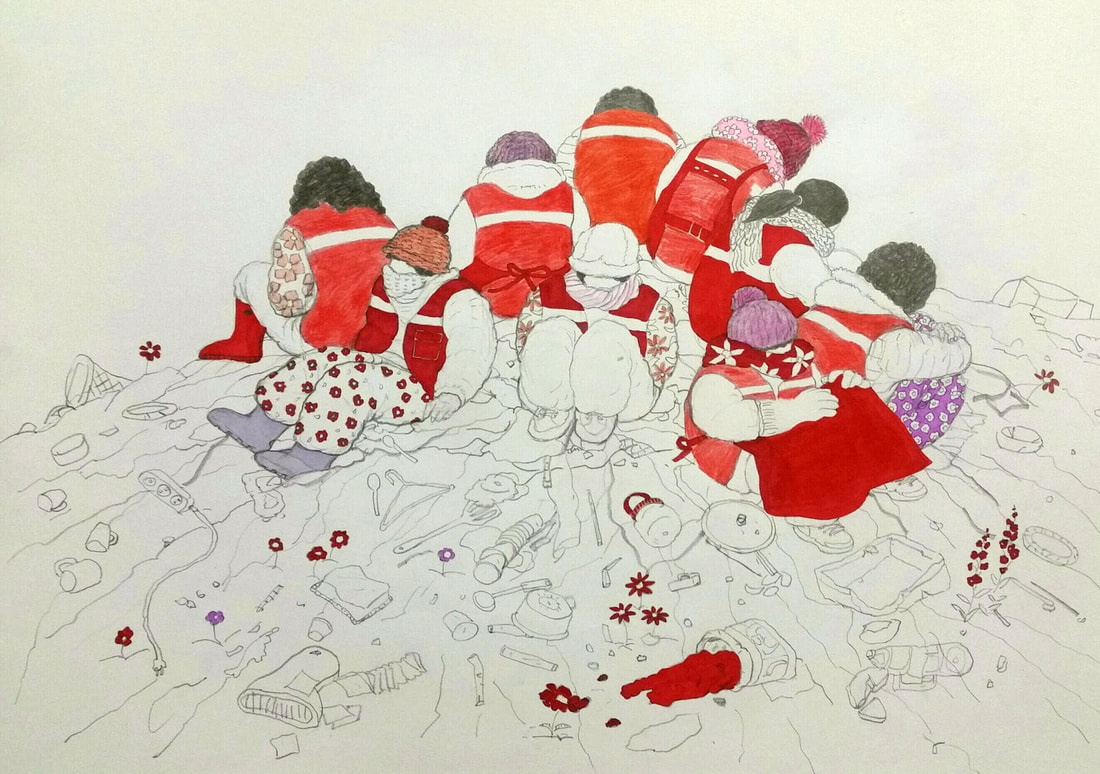
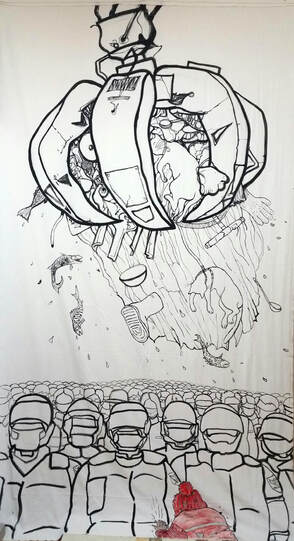
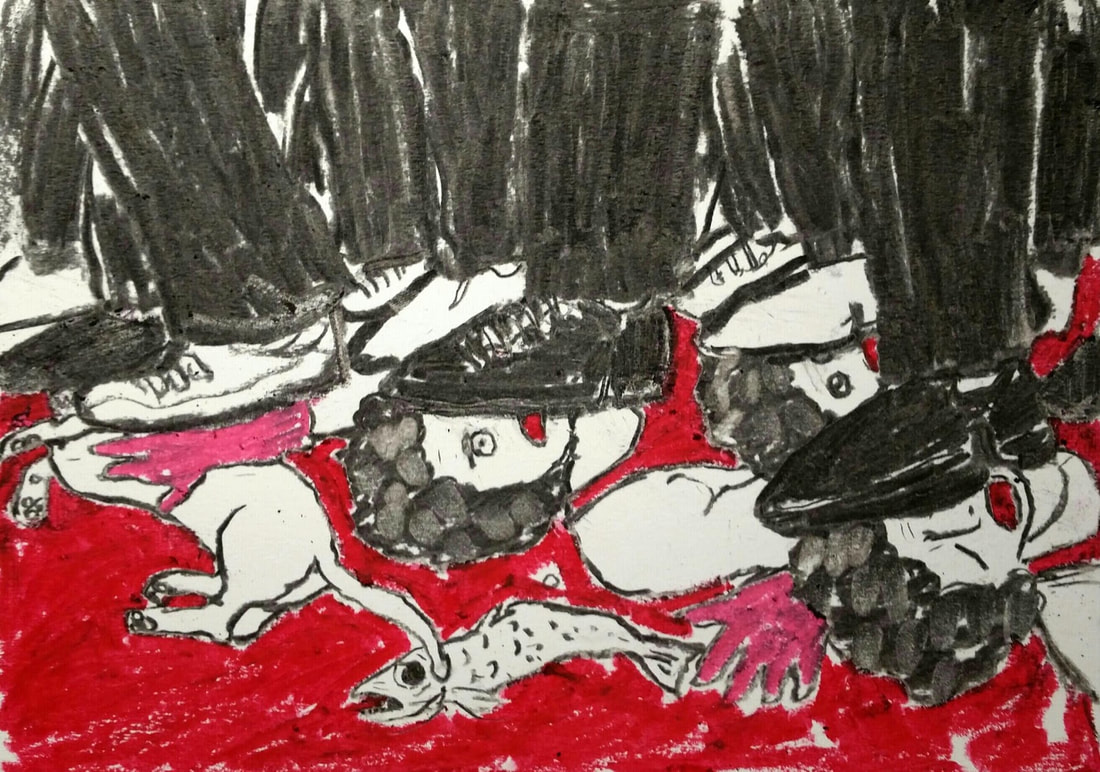
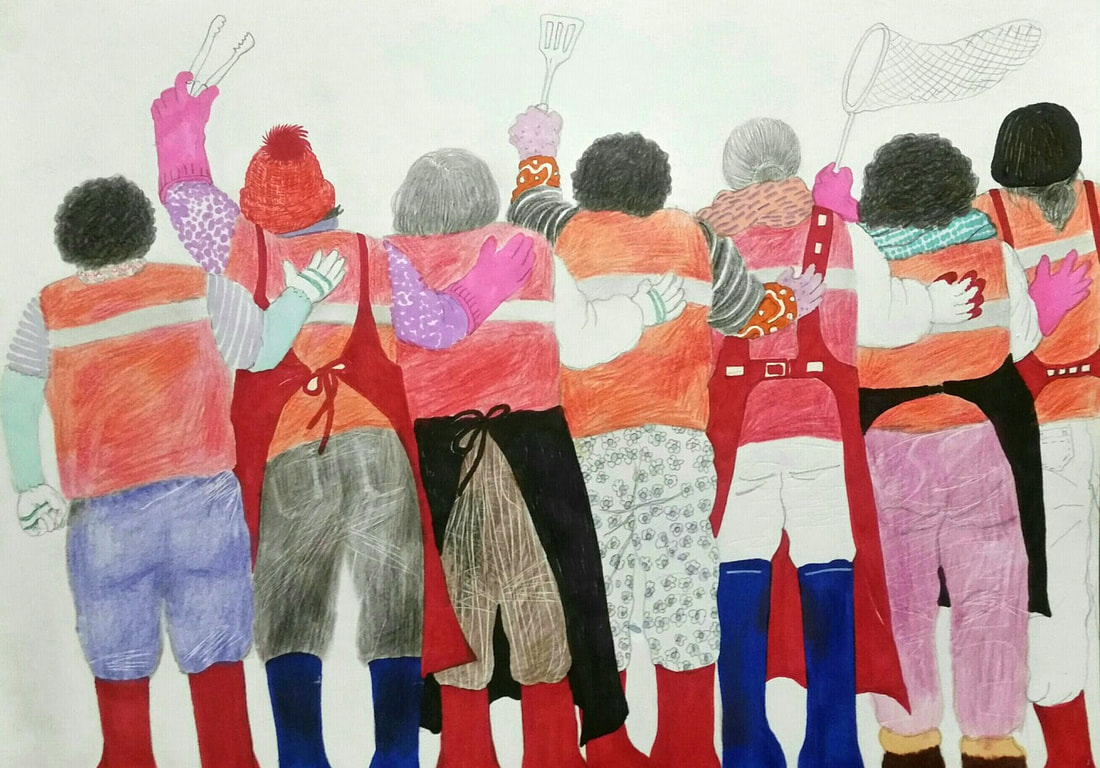
Art by: Lee Nan Young
Picture
Picture
The Noryangjin Wholesale Fisheries Market merchants’ fight against the market modernization project is just one of many redevelopment struggles that have taken place in Korea since the early 2000s, when urban renewal projects intensified and began transforming the landscape into endless high-rise apartment complexes and other structures. For an in-depth look at this history and associated social movement, listen to Contemporary Rebellions podcast Episode #4 “Redevelopment Resistance”: https://contemporaryrebellions.bandcamp.com/track/ep-4-redevelopment-resistance
 
“We are going to build a watchtower at the end of the overpass. We will have demonstrations, and play music there, so that the people in the new fishmarket can hear us. When the demolition happens, we will play a requiem from our tower. When the co-op comes to destroy this overpass, we will defend it with our lives.” 
 
-Noryangjin Fish Market merchant and activist
Picture
Picture
Friday, December 13, 2019
 
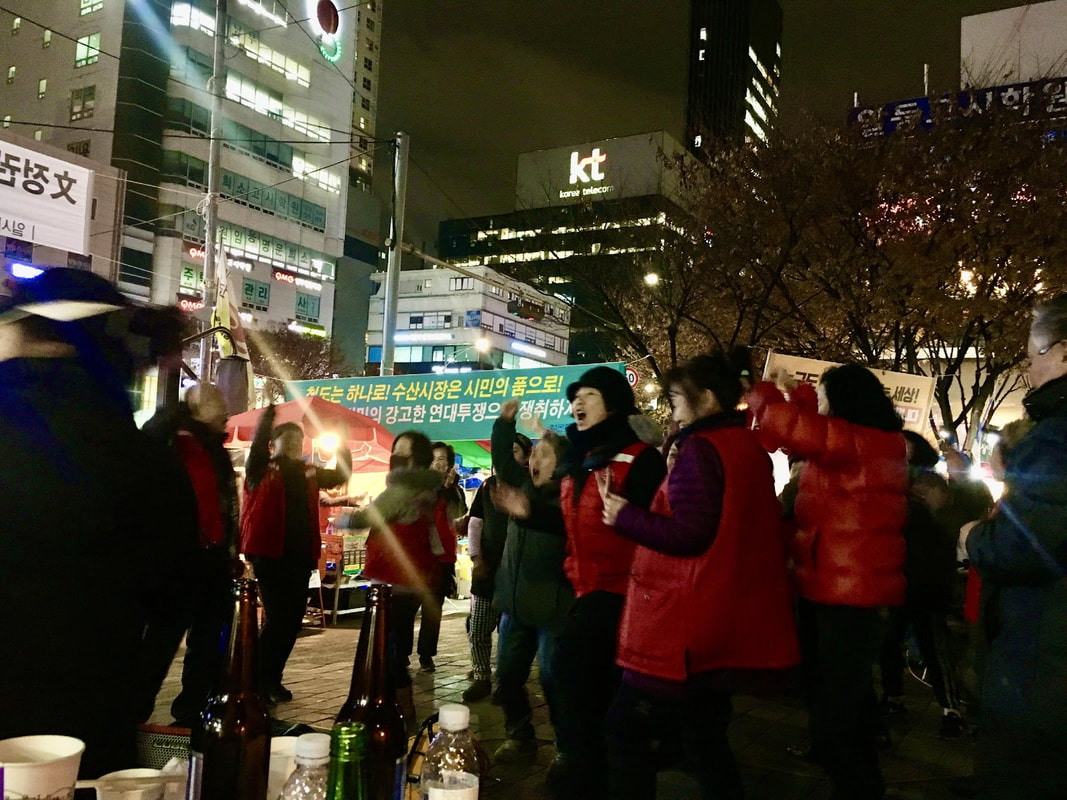
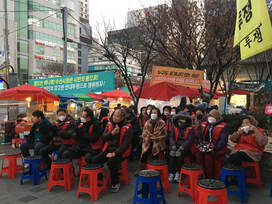
It looked like a typical Korean winter street food scene - rows of colorful market tent stalls covered in plastic for warmth. Elderly women and a few men were busy preparing and serving up meals and snacks to the groups of families and friends huddled together inside, sitting on blue and red plastic stools at plastic fold-up tables, drinking soju and beer and slurping hot bowls of noodles with slices of meat, seafood, rice and kimchi.  
 
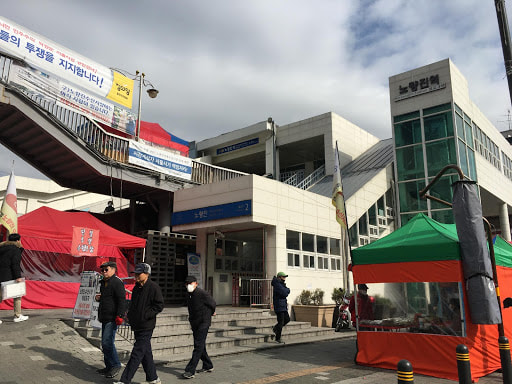
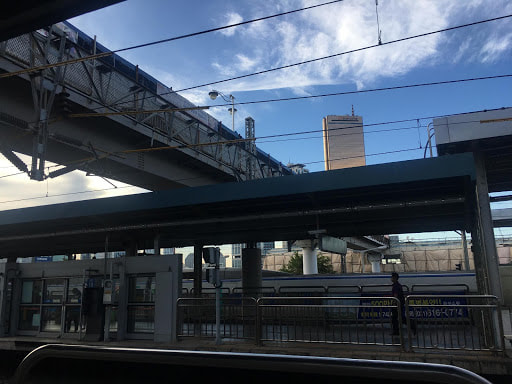
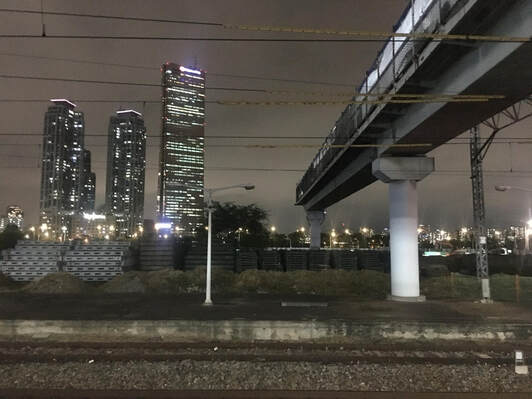
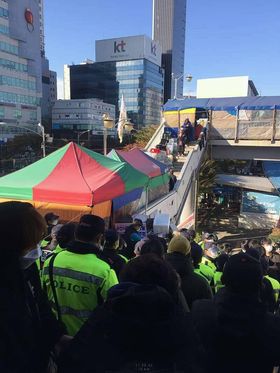
But this was never meant to be a place for street vendors. This was the open square at the bottom of the stairs outside of Noryangjin Station Subway Lines 1 and 9, one of the busiest metro stations in Seoul. The pedestrian overpass running parallel to the station originally led into the former Noryangjin Wholesale Fisheries Market, a so-called “Future Heritage Site” with a 100-year history going back to Japanese colonial times. Thousands of people pass through this square every day.
 
Having lived far from Seoul for the majority of my nearly eight years in Korea, I had never visited the original Noryangjin Fish Market while it was still a bustling local and international tourist hotspot. By the time of this winter night, the 2019 end-of-year party, the square and the overpass had been transformed into a live-in protest site. I was invited by Korean and international comrades who had been holding regular on-site concerts in solidarity with the protesting merchants. That night, there were also several other solidarity groups including progressive Christians, street vendor association members and labor unionists, singing and dancing. It was my introduction to an on-the-ground struggle that seemed to have already been lost and forgotten, yet actively continued by those who couldn’t leave.
Picture
Picture
Picture
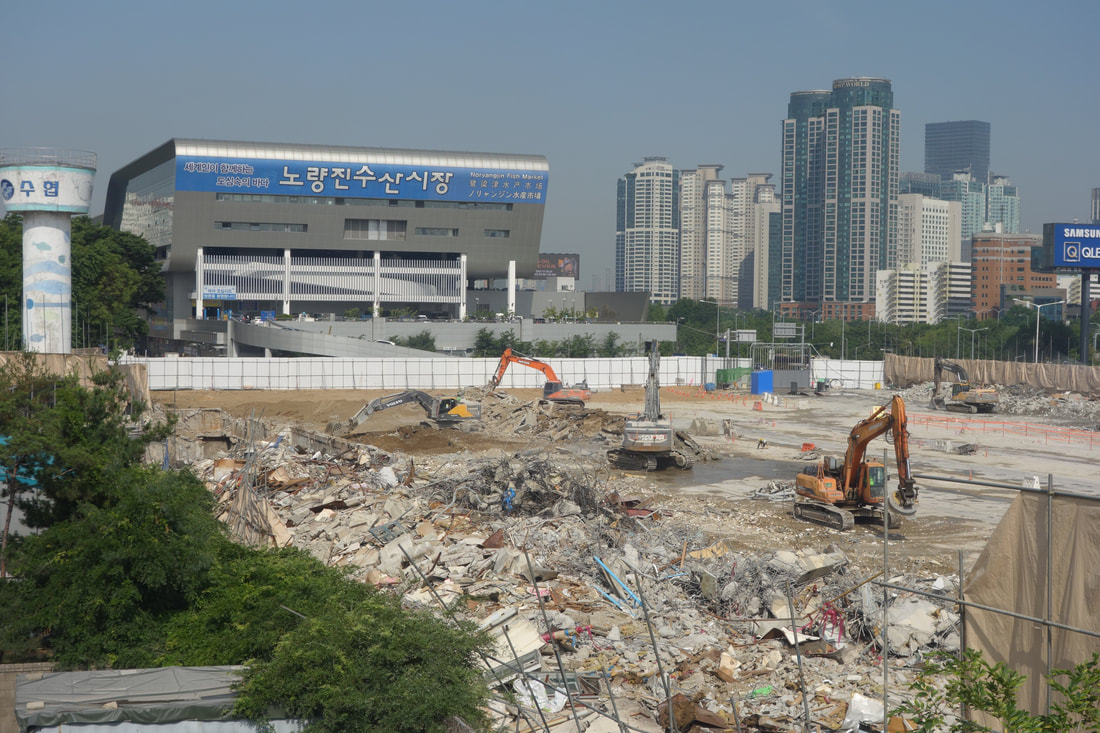
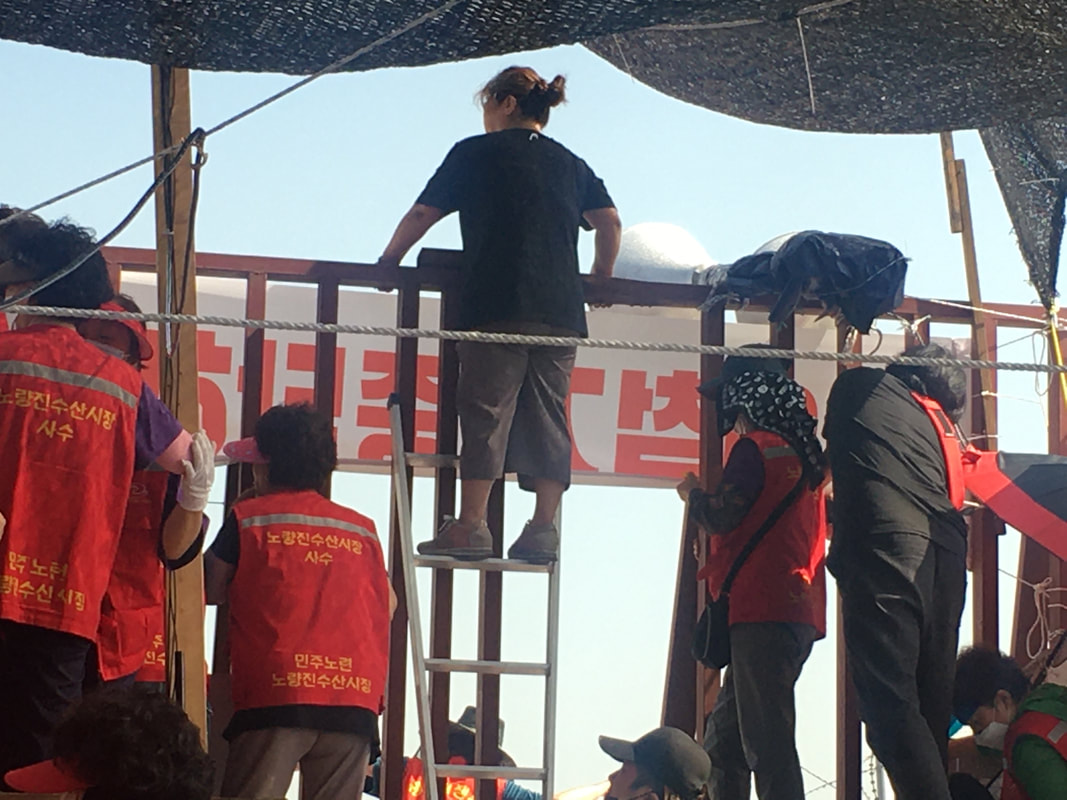
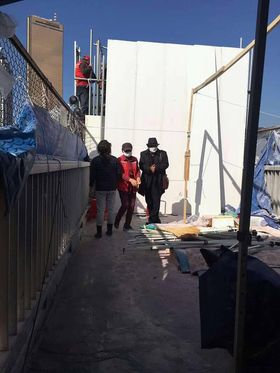
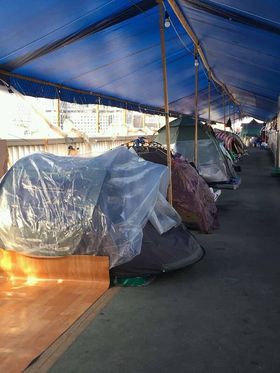
The old market had been boarded up and slated for demolition since October 2019, totally replaced by the new Noryangjin Fish Market, an immense department store and entertainment center-style modernized building next to the old site. Though the new market was built in 2015 and opened the next year, a group of around 80 mostly women merchants refused to move. Citing a lack of space, ventilation, higher rents and forced removal by the Fisheries Cooperative the merchants, affectionately called ‘aunties,’ steadfastly remained to sell fishery products inside the old market. Most of them have worked at Noryangjin for decades, arriving in Seoul from their home towns and villages as young women during the industrialization of the 1970s and 1980s. After the closing of the old market, with no remaining place to go and still refusing to capitulate to the forces behind the new market, they set up unregistered street stalls in the square. The overpass became a tent sleep-in where they take turns holding down the fort. The walkway to the overpass turned into a guarded entrance and a TV den for news and evening dramas.
 
At the end of December, I went back home to the States until the end of January 2020, when the COVID-19 pandemic first hit China and started spreading in East Asia. Coming back to Seoul, I returned to Noryangjin and began joining the solidarity concerts with my new friends and comrades. My first poetry recital at Noryangjin Station was a Valentine’s Day 2020 tribute to the merchants. One of the merchants explained their predicament and continued struggle. 
 
“When this land gets sold, of course all the merchants get kicked out. I know this is valuable land that comes at a high price, but merchants doing business here for so long are now just street vendors and the legal problem isn’t being solved. Now we keep struggling and fighting so we must win!”


    Friday, February 21, 2020
 
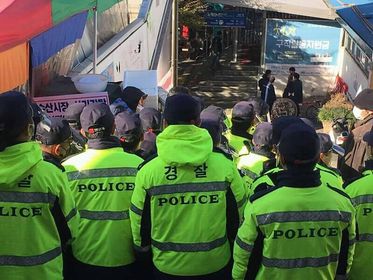
    Our podcast collective released the redevelopment     episode a few days prior to this and were looking     forward to performing again at the market on this     Friday. Instead, in the cold and dark early morning     hours, we stepped out of the intellectual facts and     the fun performances, witnessing the most violent     aspect of this struggle: an intensified, escalated     version of a typical forced demolition and eviction     scene in Korea’s redevelopment culture. Hundreds     of hired goons - called yongyeok which literally     translates as “errand men” - descended on the station square. They swiftly destroyed the market tents, scattered the merchants’ equipment, and physically and verbally abused the elderly women and activists defending them. Hundreds of district police surrounded both groups and did nothing to stop any of the violence, simply filming as recorded evidence. Supporters from various different activist groups came to record and try to block the worst of this attack. The standoff lasted into the afternoon and luckily ended with the tents being rebuilt and no human casualties.

Picture
Picture
Picture
After this attack on the Noryangjin sit-in, which was strategically planned to clear out the station square before the April municipal elections, the COVID-19 pandemic spread rapidly. Korea is known for its lively and powerful street demonstrations, but like other public gatherings, these were swiftly curtailed and in-person solidarity at Noryangjin became limited. Yet meetings and small-scale solidarity concerts continued throughout the late spring and into the summer. Due to the “illegal” nature of the street vendor sit-in, the district office continued to request that the protesting merchant association shoulder the financial burden for the winter attack, a sum of tens of thousands of dollars. As demolition day drew near, merchants held direct protests inside and outside the district office. They demanded that demolition plans be suspended until an agreement had been reached, but to no avail.   
 
Tuesday, June 16, 2020
 
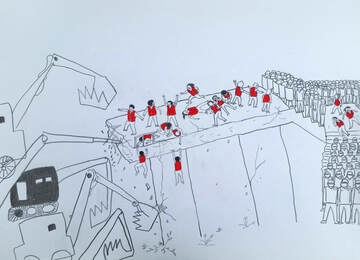
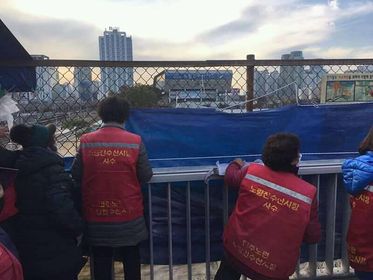
COVID-19 and demonstration restrictions didn’t stop the final demolition of the original Noryangjin Fish Market building on this day, when yongyeok and police returned to the square and the overpass. We saw the start of the demolition the day after May 18, the 40th anniversary of the Gwangju People’s Uprising of May 18, 1980. I personally witnessed the near-end on the morning of June 13, after spending the night in solidarity with the merchants in the tents. A policeman came to secure the demolition and shushed the outraged merchants looking out from the overpass watchtower, helpless as their home and livelihood of several decades slowly disappeared before their eyes. Three days later, a few merchants attempted to bungee down from the overpass into the construction site in protest. Others staged a mock funeral and sang the folk anthem “Arirang” as a farewell to the market. Throughout the demolition, merchants and a small group of activist supporters were blocked on all sides. The overpass shook precariously until all the bulldozers and cranes severed the connection with the old building.

Picture
Picture
August 2020 - present 
 
The Noryangjin overpass is now a cliff’s edge to nowhere, a lookout to a massive new construction site that may result in an expanded modern entertainment center. Solidarity gatherings continue under COVID-19 social distancing regulations. During continued negotiations with Seoul City and the local district office, the market tents have been removed and the square lays quiet. Local officials regularly inspect for any “illegal” demonstrations and gatherings. Yet the merchants, their tents and their equipment are still there on the overpass. They prepare and serve home-cooked meals, generously sharing with activists on a weekly basis. During the night watch, the elderly merchants can hardly sleep as the subway and commuter trains pass underneath them and construction continues in the dark hours. Sooner or later, the tents are likely to be forcibly evicted. Until that day, the original Noryangjin Fish Market merchants and their diverse supporters will remain at Noryangjin Station exits 1 and 2.
 
What do decolonization and liberation mean for Noryangjin Fish Market and other redevelopment struggles? As a longtime physical and forever spiritual resident of the city of Gwangju, I see the May spirit reflected in the tenacity of the several dozen aunties and grandmothers of the overpass. I also see the spirit of Peace Market garment worker Jeon Tae-il who self-immolated in martyrdom on November 13, 1970. This year is the 50th anniversary of this ‘single spark’ that set off the militancy of Korea’s labor movement. When Jeon and the Gwangju freedom fighters sacrificed their lives, perhaps their minds were already purified and liberated from the colonization of industrial capitalism and the myth of progress under redevelopment. Decades later, in a whole new era, the Noryangjin merchants show that sadly and inevitably, the struggle for a better world is not yet over. They continue their fight for their right to livelihood outside of the new market and for recognition of their place in Korea’s modern history. Until that day comes. 
 
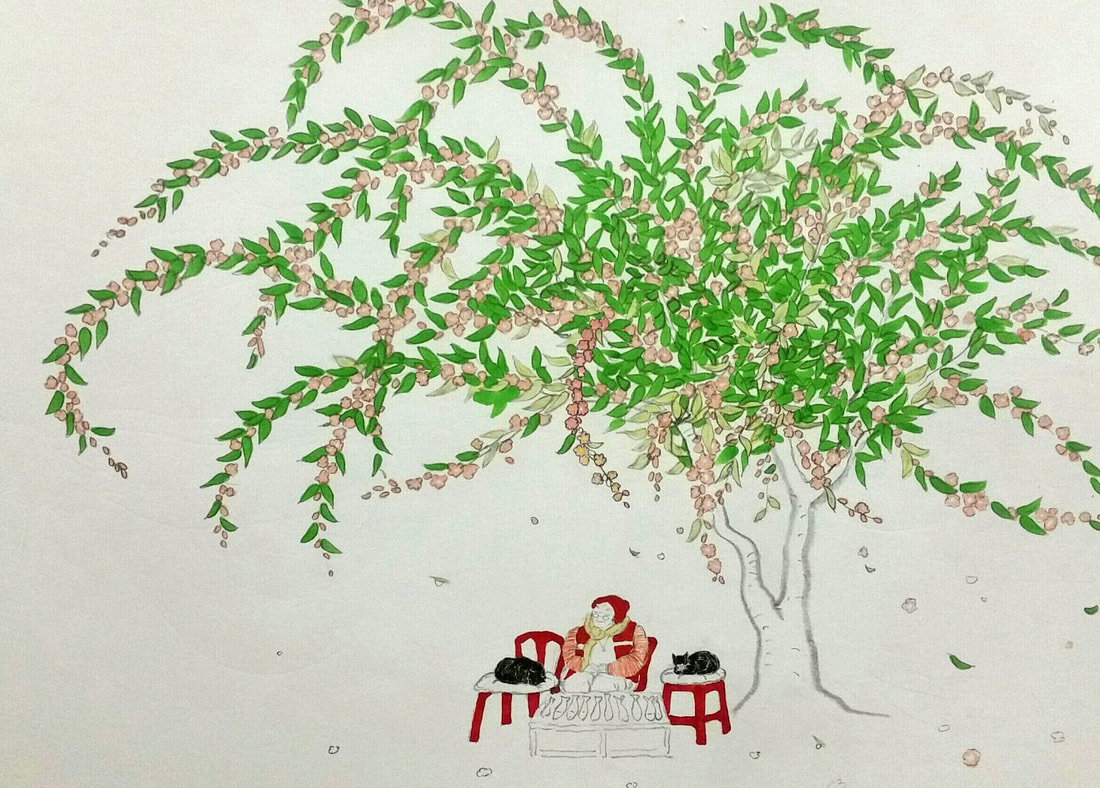
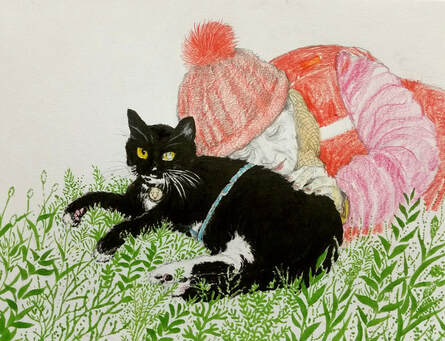
During the February 21 demolition, the makeshift house where two Noryangjin Fish Market cats were sleeping on protective leashes was uprooted and smashed in the excavator. One cat ‘Doksuni’ was found badly injured, while the other cat ‘Dalnimi’ was never found and presumed to have been killed. My first poem is the voice of Dalnimi speaking to her owner, an elderly woman merchant. My second poem is the abstract “voice” of personified demolition.
Picture
“A Cat’s Parent’s Day”
 
Mom
When they took our old fish land away
I wasn’t afraid
We moved to a nearby place
We were still together
Taking walks around the station square
Stretching my belly out for you
 
Rubbing my head against your leg
Watching over you and the other humans
and the fish and my friends
 
Mom
For years, I watched you fight
I can’t see you now
But don’t worry
I’m not hungry
I eat all the fish I want
When they took me away
It was dark and loud
I couldn’t see their hands
or smell their faces
I couldn’t hear your cries
Outside it was cold
But inside our house, my friend and I
were safe and warm
And I wasn’t afraid
 
Mom
There are mysteries everywhere
Why can’t we go back to the old fish land?
Why did they make so much noise on that day?
Why did they take us but not you and the humans?
 
Mom
Every time I purr, I feel your fingers with the painted nails
scratching under my chin
Every time you stretch out your arms, you feel my soft fur
and the low vibrations
Far away but connected by our bodies’ memories
And struggle for our place
Until we meet again
Picture
“Demolition”
 
I am the dark night
I am the early morning
The time when all are sleeping
Only the stray cats roam the streets
The alleyways empty of all except those who sleep there
I’ve come to take what’s left
 
I am the people in the city
Sitting on the train
Staring at their phones  
On the way to the gleaming high rises in the sky
Passing by
Brushing each other in the street
I’ve come to take what’s left
 
I am the word “demolition” on the building
I am the station overpass
I am the food vendor tents
I am the bulldozer
I am the wrecking ball
I am the crane
I am the thugs
I am the cops
Blocking all the exits 
I’ve come to take what’s left
 
I am the politicians
I am the construction companies
I am the corporations
I am capital
I am progress
I am you
I am me
I am all of us who look away
I’ve come to take what’s left

Editor’s Note and last-minute update:
On the night before publishing this R!P!S! Journal, I received the following update and pictures from Ana about the most recent attack on the Noryangjin merchants. It was initially shared as a personal reflection and update on Ana’s social media pages, in Korean and English. It feels crucial to me to include the English version here. For the past year, Ana has been one of the only writers to actively cover the Noryangjin struggle in English and spread international awareness about the merchants’ daily fight for survival against the private and public forces of Progress in Seoul. She writes not as a journalist but rather as a comrade, voluntarily, from shared experience and in a spirit of solidarity and friendship. 
-SM 
October 31st, 2020  

People who get on and off at Noryangjin Station, maybe you only see a big construction site?
Here's what I heard about and witnessed right here in Seoul yesterday, October 29, 2020. I knew that The Fisheries Cooperative was sending in hired thugs to set up the attached stairway to the overpass, but it turned out to be worse than that. To break through at the edge of the overpass, they suddenly fired water cannons and tear gas right in the faces of the elderly merchants and solidarity activists gathered there. When I arrived just after the attack, as usual the police were just standing around and blocking the entrance to the overpass. Eight merchants who had climbed up on the watchtower were blocked behind the construction wall until they were able to come down in the evening. Though injured and shaken, they continue to fight.
The sit-in at the Noryangjin Fish Market overpass continues to this day, from fall 2019 through the February 2020 forced demolition, the June 2020 final demolition of the old market and now until yesterday's invasion. We all want victory but it looks to be another long winter. Despite the candlelight revolution and the COVID-19 pandemic, capital and development seem to trump everything. When you become a native English teacher in Korea, you learn about the Miracle of the Han River and now I'm studying in Korean Studies graduate school, yet this is the reality that I have seen with my own eyes. It's not only a Korean problem.
After eating the most delicious meal and meeting the merchants and others on the overpass for a long time, I'm still not okay. Elder comrades who experience this time and time again and continue their daily lives and activism are doing well, but for me, witnessing it all makes it hard to live a normal life. I'm sorry to those who get hurt and most of all, I am sorry to the merchants, but since I know they are much stronger than me, I have to believe they will keep fighting to the end.
-Ana Traynin
October 29th, 2020

Pictures from shortly after the attack on October 29th, 2020

Picture

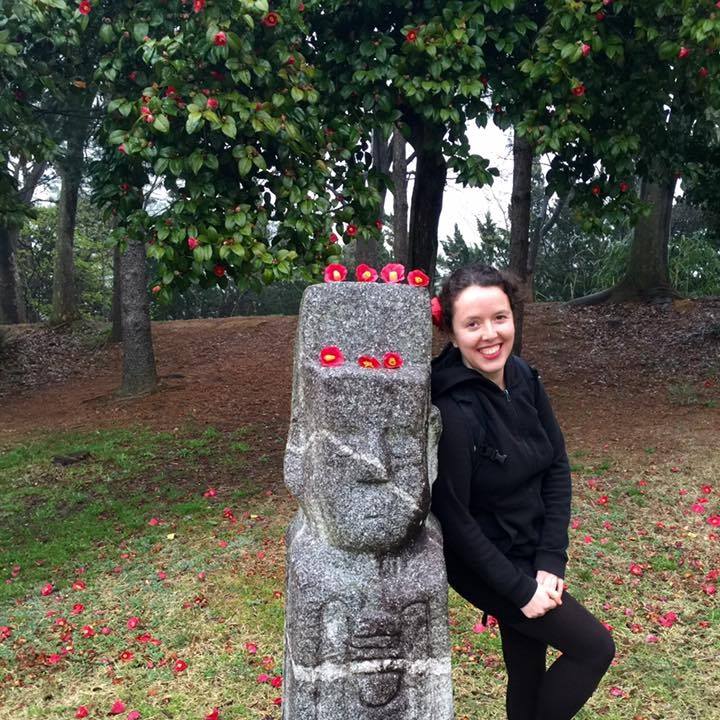
Ana Traynin

Living and observing life in South Korea since 2012, via birth and ancestry in the former USSR and settler-colonial immigration on Turtle Island. Student, teacher, writer, slowly evolving human being. Anarchist by grace and by choice. 

Picture

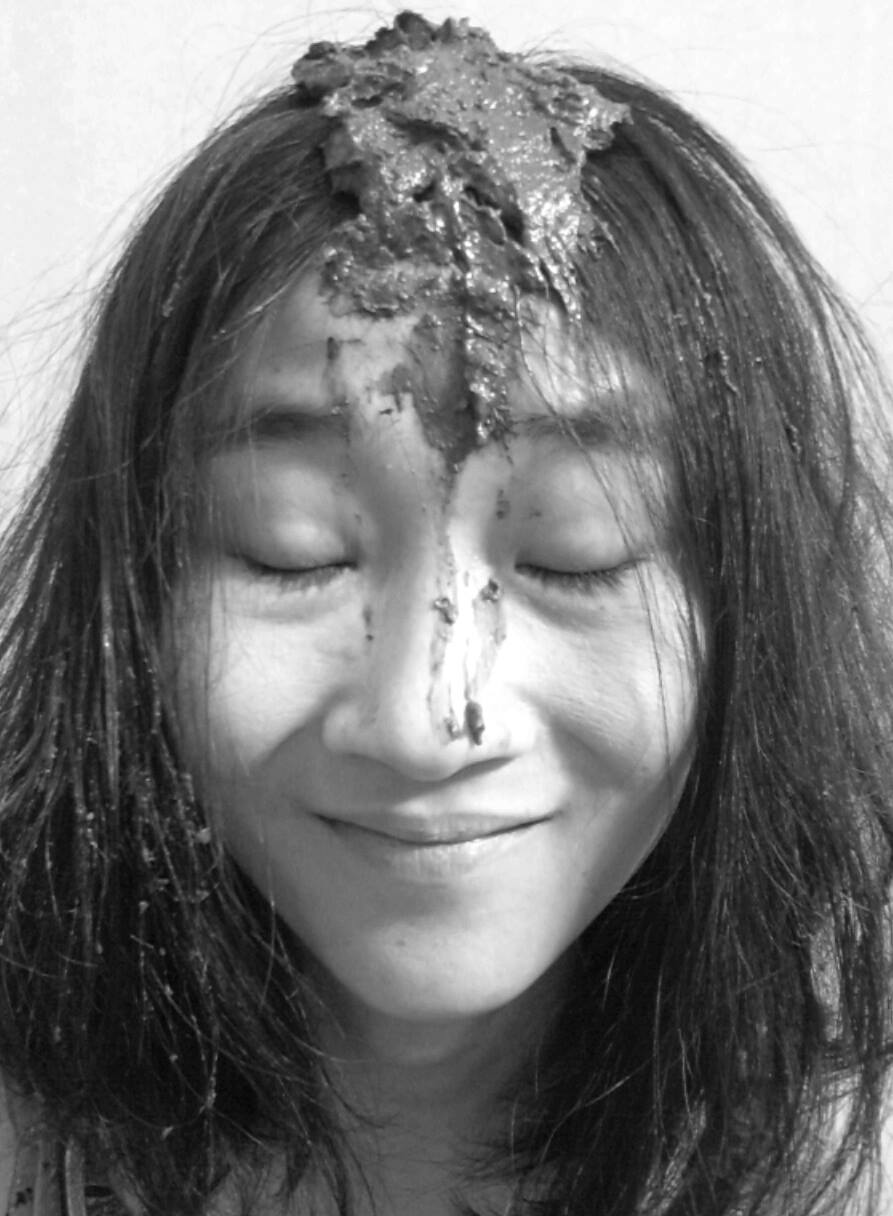
Nan Young Lee

is a painter, writer, and performance artist from Korea. Her art most often focuses on nature and social justice struggles. Currently she is completing a book of art and essays about the neighbor landscapes, trees, animals and people in the small village where she is rooted.

Ana and Nan Young can both be reached through contacting this Journal.
0 Comments


Leave a Reply.

    Author

    Write something about yourself. No need to be fancy, just an overview.

    Archives

    October 2020
    September 2020

    Categories

    All

    RSS Feed

Home  |  About  |  Blog  |  Iconocast  |  Library  |  Gatherings  |  Donate  |  Contact  |  Comrades