WWW.JESUSRADICALS.COM
  • About
  • Rock! Paper! Scissors!
    • What's in a Name?
    • Submission Guidelines
    • Call for Content
    • Past Issues >
      • Blog Archives (2005 - 2017)
      • Liberation for Every Body
      • The Movement Makes Us Human
      • Truth, Trust, and Power
      • Art Against Empire
      • Earth, Ecology, and the End of the Age
      • Decolonization, Incarnation, and Liberation
  • Library
    • Add an entry
    • Letter A >
      • Abelism
      • Accountability
      • Ally
      • Anarchism
      • Animal Liberation
      • Anthropocentrism
      • Assimilation
    • Letter B >
      • Base Communities
      • Biblical Exegisis
    • Letter C >
      • Capitalism
      • Catholic Worker
      • Civilization
    • Letter D >
      • Decolonization
      • Direct Action
    • Letter F >
      • Factory Farming
      • Feminism
      • Foraging
    • Letter G >
      • Genocide
      • Globalization
    • Letter H >
      • Heteropatriarchy
      • Humane Killing
    • Letter I >
      • Internalized Oppression
      • Intersectionality
    • Letter L >
      • Liberation Theology
    • Letter M >
      • Marginal Voices
      • Mass Media
    • Letter N >
      • Nonviolence
    • Letter O >
      • Othering
    • Letter P >
      • Pedagogies of Liberation
      • Police
      • Privilege
    • Letter Q >
      • Queer
    • Letter R >
      • Racism
      • Resurrection
    • Letter S >
      • Speceisism
      • Spiritual/Cultural Appropriation
      • State
    • Letter T >
      • Technology
      • Theopolitics
    • Letter V >
      • Voting
    • Letter W >
      • War
      • White Supremacy
  • Iconocast
    • Collective
    • Canvas
  • Donate
  • Contact
  • Join Us
  • About
  • Rock! Paper! Scissors!
    • What's in a Name?
    • Submission Guidelines
    • Call for Content
    • Past Issues >
      • Blog Archives (2005 - 2017)
      • Liberation for Every Body
      • The Movement Makes Us Human
      • Truth, Trust, and Power
      • Art Against Empire
      • Earth, Ecology, and the End of the Age
      • Decolonization, Incarnation, and Liberation
  • Library
    • Add an entry
    • Letter A >
      • Abelism
      • Accountability
      • Ally
      • Anarchism
      • Animal Liberation
      • Anthropocentrism
      • Assimilation
    • Letter B >
      • Base Communities
      • Biblical Exegisis
    • Letter C >
      • Capitalism
      • Catholic Worker
      • Civilization
    • Letter D >
      • Decolonization
      • Direct Action
    • Letter F >
      • Factory Farming
      • Feminism
      • Foraging
    • Letter G >
      • Genocide
      • Globalization
    • Letter H >
      • Heteropatriarchy
      • Humane Killing
    • Letter I >
      • Internalized Oppression
      • Intersectionality
    • Letter L >
      • Liberation Theology
    • Letter M >
      • Marginal Voices
      • Mass Media
    • Letter N >
      • Nonviolence
    • Letter O >
      • Othering
    • Letter P >
      • Pedagogies of Liberation
      • Police
      • Privilege
    • Letter Q >
      • Queer
    • Letter R >
      • Racism
      • Resurrection
    • Letter S >
      • Speceisism
      • Spiritual/Cultural Appropriation
      • State
    • Letter T >
      • Technology
      • Theopolitics
    • Letter V >
      • Voting
    • Letter W >
      • War
      • White Supremacy
  • Iconocast
    • Collective
    • Canvas
  • Donate
  • Contact
  • Join Us
Search by typing & pressing enter

YOUR CART

Rock! Paper! Scissors!
 Tools for anarchist + Christian thought and action

Vol 2. No. 3 ​
Decolonization, Incarnation, and Liberation
Guest editor: Seth Patrick Martin
10/31/2020 1 Comment

It Will Be Women That End This War

A conversation with Christine Ahn about dreams, mentors, and finding hope in the Long View while struggling for peace in Korea
(Interviewed by Seth Martin)​
Picture

Editor’s Note:
Christine Ahn is a Korean immigrant and the youngest of 10 who grew up in the States after her family followed her older sister, who had married an American, from war-torn Korea to restart their lives in the US. In recent years, after decades of peace activism, advocacy for women's rights, and anti-colonial writing and speaking, Ahn has become one of the most well-known Korean-American activists concerning the struggle for a women-led peace movement in Korea to end the Korean War and bring about Korean reunification. In the early 2000s Ahn worked in solidarity with Korean farmers during the resistance to relocation and the construction of what is now the largest US overseas military base in the world, in Pyeongtaek. She was also one of the first activists to spread the story of the naval base resistance movement in Jeju Island, Gangjeong Village, to international audiences, through direct action and publishing several widely read articles in English about the struggle in major news outlets. Ahn is the co-founder of Women Cross DMZ (WCDMZ), and in 2015 she and 29 women peace activists from around the world crossed the Korean demilitarized zone (DMZ) together and met and called for peace and unification in a joint action with North and South Korean women.
 
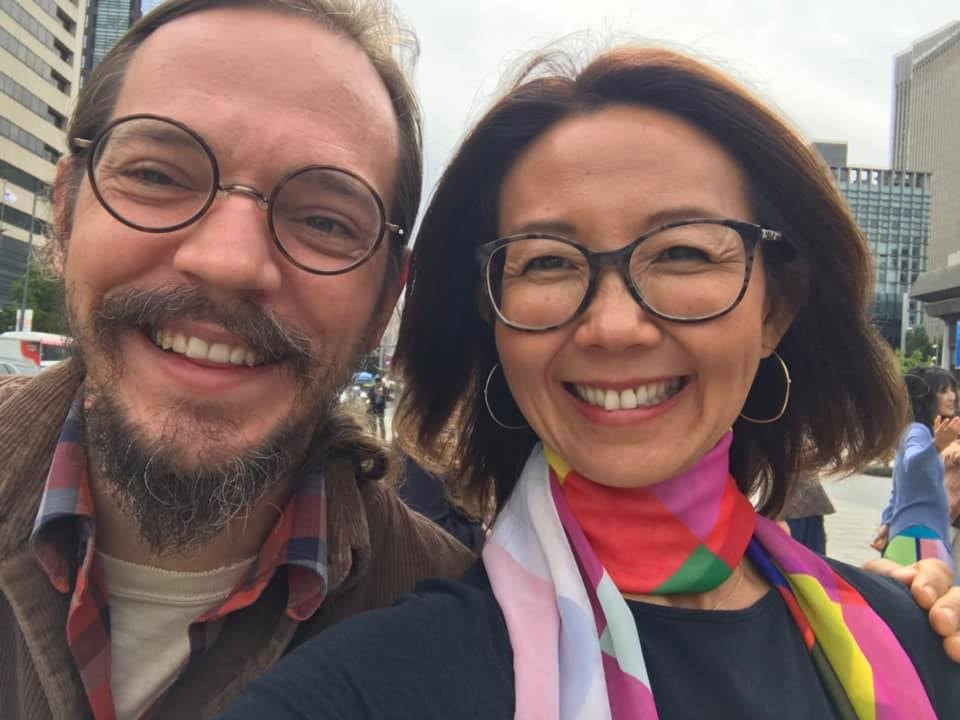
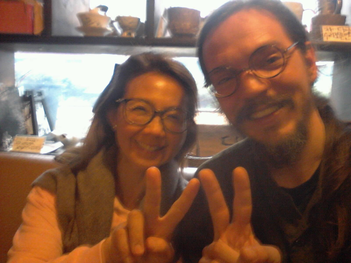
On April 28th, 2019, I sat down with Ahn for an interview in a little tea house in Seoul. She was in Korea then mainly to take part in a country-wide demonstration of unity along the DMZ, which marked the one year anniversary of the Panmunjom Declaration, when South Korean President Moon Jae-in and North Korean leader Kim Jong-un made history by meeting and greeting one another in the DMZ, and then promising Koreans north and south to end the Korean War within a year.
 
Despite the historical steps taken by Korean leadership and the overwhelming popular support in South Korea to end the war only two years ago, in April 2019 the state of the Korean Peace Process did not look good. A month before, several forces in the US and SK--including Nancy Pelosi and John Bolton--had worked together to derail the Hanoi Summit between Trump and KJU. Rather than make a joint statement about ending US-NK hostilities and working towards an end-of-war declaration, as leaders on both sides had talked about publicly leading up to the summit, the meeting ended abruptly and coldly, with no deal, and an openly happy John Bolton, among other US war-hawks. In Seoul, the mood among peace activists and much of the Korean public for weeks after the failed Hanoi Summit was one of frustration and heartbreak.
 
Ahn and I discussed personal and collective stories of struggle against militarism and empire in Korea. She shared parts of her journey to becoming a leader in the Korean-American peace movement, including family history about one of her "crazy uncles" who during the years of Japanese occupation worked on a train that traveled to Manchuria. Upon returning to his small cabin up in the Bukhansan mountains outside Seoul, he would print updates on a lithograph machine about the Korean independence guerrilla fighters. He would then smuggle his works on the train and toss them at a designated spot where the news would then be circulated underground. He risked his life doing this and after his cover was blown by the Japanese authorities, he became a monk and died young.
 
We talked about the power and importance of women leaders, and the strength that comes from knowing and including oneself in the "Long View", as a root of hope and strength for the struggle to end the Korean War.

This summer Ahn was awarded the prestigious 2020 US Peace Prize for her work with international women to end the Korean War.

Below are excerpts from our conversation in 2019.
-SM 

Picture
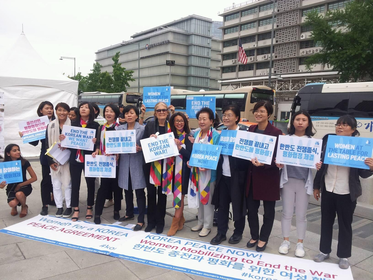
In front of the US Embassy, Seoul. September 2019.
PictureAt the Interview
SM: There was a funny moment when all of this was still in the early stages. People were ridiculing Trump for saying he wants the Nobel Peace Prize. Of course he does! It's Trump, you know? And of course he sees this moment as his prize. But rather than contradict him, President Moon Jae-In (MJI) said in a very clever way--

CA: Let him have it.

SM: Yes, let him have it!

CA: We want peace.

SM: And of course in the western media, it was all translated in, well, the very same way that the MJI government wanted it to be understood. Which was something like: you're great, Trump. Please take it. But a closer look at the Korean showed things were a little more nuanced. The actual meaning of MJI’s comment was closer to: take it, because that's not what we're fighting for. 

CA: Right, exactly.


SM: So let's go back to that Long View. You already shared a little bit about your family's story. When did you start becoming an activist? How did it lead to Women Cross DMZ? And also, especially, the Gangjeong story? What started it all for you?

CA: I've been an activist for my whole adult life. I mean, really, I think it's the experience of growing up in the US as a working class immigrant, and seeing the tremendous inequality and the hardship that my parents went through. I went to 12 public schools growing up. I moved from home to home. I think I've always been fighting for the underdog.


And then it all deepened when I was a graduate student. I went to Georgetown on a scholarship. I was in a class at the School of Foreign Service, and a guy named Robert Gallucci came to talk about his moment in the White House, in the Oval Office, when Bill Clinton almost bombed North Korea. And that was when Jimmy Carter got on a plane, and he called the White House and said, I'm going to North Korea with a CNN camera crew.

SM: And at the time a lot of the White House staff, the powerful in office, were furious with Carter, right? As I’ve heard it, there's almost no way to overstate how angry they were. They were calling him, basically, a wild renegade who's destroying the US.

CA: Yeah. They were furious with Carter. But he did the right thing. He single-handedly stopped the US from doing a pre-emptive strike on North Korea. I remember being so completely shocked by that story, and that, before then, I didn't really know about Korea. And so I began my journey. I'd spent all this time working in Jamaica, at the US/Mexico border, on the Navajo reservation with the Dineh. I had already developed a critical view of  US Empire. And it pained me that I didn't know enough about Korea, about my own homeland. Once I started to learn more, I felt I had a responsibility.


SM: How did that lead into the concept, and the building up, of Women Cross DMZ (WCDMZ)? And is there a Gangjeong connection with the origins of Women Cross DMZ? Because, I see WCDMZ not only as inspiring, but to me it's a kind of global-level performance art, too, in a way. And I don't say that as a knock-down! I say that as praise, it's high class activism!

CA: [laughing]

S: I mean, in the sense that, performance art is what we need.

CA: We need to have creative action to break us out of the mold.

SM: That’s what I posted as a response to one of your [social media] posts a few days ago, that the first thing I would say about WCDMZ, above all, is that it sparks imagination. And imagination instantly causes you to question the narrative.

CA: Exactly. It breaks the status quo! For example, last night, out for dinner with activists, we were just trying to think about global strategy. And we gotta do the things that we know work. We gotta do education, advocacy, organizing, the basics of activism. But, we also need creative action to totally just break us out of our silos. Actually that's what I love to do! I love to do the basics, and build movement. But I absolutely love creative action! So I am always trying to think, what is the next creative thing that we can do to inspire civil disobedience, and shake things up?

SM: Yes. Joy is quite the threat. Joy is quite the threat to unjust power!

CA: You can do it in a joyful way. Then it is super subversive.


SM: How did it happen that your daughter is honored with the name Jeju? Let’s talk about how Gangjeong and the current WCDMZ manifestation—how they drive you, how WCDMZ started, and the importance of not just representation, but direct voices and actions from women in this complicated, historical moment.

CA: Well, I consider myself a public intellectual. And even though I might have a master’s degree on international policy from Georgetown, my education comes from movements. I see myself as being taught by other activists and by movements, and studying, and doing critical education—I see study as part of struggle. I really owe it to movements. They taught me. They trained me. And that’s where I will always have my home. I’ve been taught by some really great, amazing activists.


SM: Who are some of your mentors?

 
CA: Linda Burnham. She started the Women of Color Resource Center in Oakland, California. She was very close to Angela Davis, they grew up together in the south where her parents were first generation civil rights organizers. Linda is a powerful Black woman, an amazing feminist and third world liberation activist.

Also Anuradha Mittal. I used to work with her at Food First. She was one of the leading anti-globalization activists in the Battle for Seattle against the WTO. She’s one of my mentors and really taught me so much about third world liberation movements as well as some very tangible skills, like the importance of writing op-eds.

And Pablo Eisenberg, who was the founder of Center for Community Change and the National Committee for Responsive Philanthropy, the oldest US philanthropic watchdog. Pablo really taught me a lot about philanthropy and money, and the way the foundations and the whole non-profit industrial complex works.
 
SM: The mentors and activists you have been informed by—all of those voices you mentioned share a very deep critique of Globalization.

CA: Totally. And Capitalism and racism. I’ve had lots of training and education, critical education, but I’ve also seen really effective activists. So when I came to Korea I already had a set of specific skills. I already had a critical analysis. I had a set of tools, kind of like a leatherman. I brought what I had learned from other movements into the Korea work. And one of the first things that I said was, we need a think tank! We need Korean-American voices that are aggressive and critical, to write and speak on TV! So I helped create the Korea Policy Institute.


SM: Which goes back to our discussion earlier of how the dominant English narratives about Korea are almost all pushed by white guys. White guys who mostly can’t speak Korean.

CA: Exactly. How do we own the narrative? How do we try our hand at these things that seem so inaccessible? It is incredible to me that I’ve had five op-eds in the New York Times without anyone pitching them. It is kind of surreal. I have never been a really good student, it’s just that I truly believe in democracy. I’m a democrat.

SM: Small d democrat.

CA: I feel that if I don’t try then we are never going to get anywhere. So, when I heard about the Gangjeong Struggle, I had to do something. But before Gangjeong, in the early/mid-2000s, I had been to Pyeongtaek. I went to Daechuri and Doduri, and I was deeply impacted and pained.


SM: For readers who don’t know much about it, what happened in Pyeongtaek?

CA: It’s the largest US military base outside of the continental US! And it’s in South Korea, fifty miles south of Seoul. 

SM: And it’s still being resisted.

CA: Of course it is! Korean rice farmers had tilled and cultivated that soil for generations. And they were just completely displaced in the name of US national security. It was just such a weird, sick irony to me. I stood there before the farmers and activists, and it just really pained me that they were losing their land, their homes, and their community so that the already large US military base could expand even more to accommodate soldiers’ families, including building water parks and Starbucks. And when the Gangjeong struggle came, I felt like, oh my god, we can’t let it happen again. So I went to Gangjeong. I had been in touch with Choi Sung-Hee, and with the filmmaker Professor Yang Yoon-Mo, and Father Mun Jeong Hyeon. I just felt like I had to use the tools that I had before me, so I went to Gangjeong.

SM: I imagine you worked with or knew Father Mun from Pyeongtaek, right?

CA: Yes, exactly.

SM: He was doing his music band act, right? At that time, or maybe later? The Travelling Peace Band.

CA: Yes, I knew Father Mun from Pyeongtaek. I landed ready to rock and roll but my only problem was that I was so sick. I was nauseous because I realized I was pregnant with my daughter Jeju. Still, I was moved by the resistance and helped break the first [international English-language] story about Gangjeong. I got it into the NYT on Saturday, and I had worked with Gloria Steinem to get hers ready too, and fact-checked, and we got hers in the Sunday New York Times. So that was a friendship that we had formed. And when I came back I was attacked by the South Korean government, which was during the Lee Myung-bak presidency. And they did some crazy psychological ops on me, really weird stuff.

SM: Did they publish red-baiting against you?

CA: Well that was just the beginning. But even before, in 2004, I gave a speech here [South Korea], at the Human Rights Commission about North Korean human rights. South Korea, under President Roh Moo-hyun at the time, was starting to face criticism that they weren’t addressing North Korea’s human rights issues. So the Human Rights Commission had a symposium and I was invited. I was writing about agricultural and food sovereignty while working at Food First and upon returning from my first trip to North Korea in 2004, I wrote about how the human rights crisis was the result of the unresolved Korean War.  So I gave this really provocative speech—well, not provocative to me, but it seemed provocative at the time [laughs]. I spoke about how hypocritical it was that the United States was passing human rights legislation against North Korea and more sanctions when what had just happened was Abu Ghraib and Guantanamo during the Bush administration. I got a standing ovation! It was because it was just--

SM: Because it was the truth.

CA: This speech kind of began the process. There was a guy named Joshua Stanton. He was stationed in South Korea during the height of anti-Korean sentiment in the early 2000s after US soldiers in a tank ran over and killed two Korean school girls on their way to a birthday party. He was a military JAG Lawyer but in 2004 had started working for the Department of Homeland Security. He started to attack me in his blog. 

SM: He started to spread the slander.

CA: Saying I am pro-NK. Yeah. So he wrote this piece, “Who is Christine Ahn? The Alternative Reality of Christine Ahn.” I was freaked. But you know what?

SM: But it was also inspiring for you, right? Because there’s no turning back after something like this, you know?

CA: Well, basically, it’s back to the Long View. People have been red-baited, people have been killed, they’ve been silenced and tortured because they believed in a different future for Korea.  I’m not saying that I'm impenetrable, or that I can withstand that. It is painful, and it’s...

SM: History, knowledge is power.

CA: Knowledge is power, right, but because you know what came before you, you also know the sacrifices that have been made. And you see the resilience. But what I can contribute in my lifetime, I have to do it. I have to do it to advance progress. I have to do it to advance justice. I have to do it to advance the truth. What small part I can play, in my lifetime here, I have to do it.

SM: Thank you so much.

CA: Yeah! [laughter together] But who knows? I am totally not religious, yet I do feel that in many ways it’s like the ancestors are helping lead the way. And I have to have faith.

SM: It’s like your family said, you’re the crazy uncle! You’re back! You’re back! The fast is over!

[laughter]

CA: Right! I do feel like, in many ways, the Universe has our back. If you are on the right path, and if you are doing what your heart sings and loves, then the Universe will provide for you. I do believe that. I really do.


SM: I was going to spend some of this time asking you more about the Trump/US Left paradigm, but A) we've talked a little bit about it already, and B) prolonging this discussion might just perpetuate the problem of making it too much about the US, right? With that said, let's go back to when you said you have your time on the earth, you have your knowledge, you have your experiences, you have your sense of responsibility, and the joy that you get when you know that you're doing what's right. You are following a long line of people who have been red-baited, and who have been lied about, tortured, even killed for, when it boils down to it, just trying to live a simple life that promotes truth. Right? And you've faced your fair share of it already, and here you are still, pushing. I'd like to conclude our conversation by focusing more specifically on your work in and about Korea, from from Pyeongtaek to Gangjeong, and then Women Cross DMZ, and the connections between these struggles. Did WCDMZ directly grow out of the experiences you had in Gangjeong? Or were the roots growing before that? I mean WCDMZ as we know it now, in its contemporary manifestation, you know, its bigness?

CA: I know it is so funny! It doesn't feel big! But WCDMZ came out of a dream I had in 2009. I was working at the Global Fund for Women as my day job. I worked a lot in women's organizations during the day. And by moonlight, I was a Korea peace activist. And this film came to my organization, because I was helping to lead an initiative called Women Dismantling Militarism. We were raising money and supporting women's groups in conflict areas. And so we brought in this film by Abigail Disney called Pray the Devil Back to Hell. It was about Liberian women crossing Muslim-Christian lines to end a 17 year conflict. I was super inspired. The night after watching that film, I woke up in the middle of the night. I turned on my computer to work, and I saw a NYT article by Choe Sang Hun, about the flooding of the Imjingang. I don't know if you know that story?
SM: Only a little bit.

CA: This is the story of the origins of WCDMZ. The Imjingang was flooding. It's a river that flows through the heart of Korea. Poems and songs have been written about it. "Why can birds fly over, but I can't see my loved one?" The Imjingang River is so symbolic. And North Korea allegedly lifted the floodgates without telling South Korea. It was during Lee Myung-bak and Kim Jong-Il’s leadership at the time. I remember reading about the flooding, and feeling: Hey? Why can't these guys just figure it out, and pick up the phone and call each other? But the hotline had been cut off between North and South Korea. I went back to sleep, deeply frustrated, and that's when I had the dream.

 
I was wading in the river.

I was with others. It was before the break of dawn. And as the sun started to rise, a light started to flow down the river. And that's when that light morphed into families embracing each other. It was so beautiful and profound. But I just needed to see where the source of the light was coming from. So I kept going up the river. And that's when I came to a circle of women. And they were stirring something that they then poured into little vessels, which then became the light that flowed down the river. And that's when I woke up and I said, "I know who will end the war. It will be women that end this war."


SM: Oh my goodness.

CA: This was actually predating Gangjeong.

SM: But you sat with it for years.

CA: Well I did. I asked, but how will women end this war? So I got a fellowship at the University of Michigan. I asked my friend and sun-bae Hye-Jung Park to help me do some oral history research. How have women been building peace across the DMZ? And that's when I learned that the first meeting of North and South Korean women took place in 1991. They were brought together by a Japanese woman.

SM: Wow, so complicated.

CA: So profound!

SM: Yes, and heartbreaking.

CA: Yeah. And the first meetings were in Tokyo and Pyongyang and Seoul. And so I felt like, when there are times of impasse between the two Koreas, international solidarity has a role to play. And so that's when, in 2013. I saw five kiwis drive their motorbikes across the DMZ. I contacted them. I said, tell me how you did it. If they can do it, women calling for peace can certainly do it. So that's how we got going. And it turned out that the guy that was working at the DPRK Permanent Mission to the UN at the time was Pak Chol, who I had met in 2004 in Pyongyang. Pak Chol is very funny and witty, especially because he speaks English with a British accent. He had extensive experience engaging with civil society groups from around the world, including helping as a translator during the 1989 World Youth Conference in Pyongyang where Im Su-kyung attended as the first South Korean civilian. As he happened to be working at the UN at the time, I wrote to him, and I said, Pak Chol--

SM: The synchronicity's amazing.

CA: The Universe provides. And he said, that's a crazy idea! But write a proposal to Pyongyang. And so I wrote a proposal, and I soon received an invitation from Pyongyang to go and pitch the idea. I decided at the 11th hour to bring my daughter Jeju. And you probably have read some of the stories about that. But that's basically how it got started.


SM: I am thinking of the Long View again. What would you say to people and where would you send people to look? For a better understanding of the narrative? And of how they can contribute to peace now?

CA: I like the theme of the Long View. You also asked me earlier, what gives me hope? In this moment I feel like the Long View is a hard view. But it's what gives us sustenance to keep going. To know that it's a long road, but it just keeps getting better. But frankly, I'm nervous. Because I don't know if we're going to have this opportunity in another generation.

SM: We started this conversation acknowledging how in many ways, what a dark and depressing moment this is in the wake of Hanoi. But at the same time, yesterday upwards of half a million people participated directly or indirectly in the DMZ hand-holding symbolic movement. Which is telling us so strongly that the stream is not dead.

CA: Right. Exactly.

SM: And you are still following the dream given to you, of women leading and making peace, over this flooded river, and that dream keeps guiding us now, while we see three—I mean it couldn't be more stereotypical—three powerful, charismatic men, leading poorly. I would hesitate to say MJI is leading poorly. I think he's trying, really, I do believe he's trying. The steps have been incredible, and it's easy to lose sight of the progress because of the way the US has hijacked it so far. In this time when the prospects for peace can appear so depressingly low, but we still have hope to hold on to, can we keep a real movement going, that is largely women and Korean-led? What would you say to people who want to know what to do? What gives you hope? And what should they do? Especially as Americans?

CA: Well, I feel that in the US what gives me hope is that it's changing. How America looks is changing, and it's a good change. I feel that we are finally seeing, for the first time in generations, real discussions about US Foreign Policy on a large and public scale. There are many critical writers, too, like Stephen Kinzer—have you read his stuff?

SM: A little. Didn't he write Overthrow?

CA: Yeah, he was a NYT journalist, he's written a lot. He writes a lot about US Imperialism, basically, but writes it in a way that's accessible to Americans. He wrote a book about the period in the 1880s and the 1890s, after the Civil War, when there was a true debate about what direction the US will go in. Will it truly live out the ideals, the democracy, the equality, or are we going to be an empire? We know what happened. But he talks about that period, and how if you go back and read the Congressional debates, we were so much more advanced politically. 

SM: Discussing candidly what was in front of our faces.

CA: Exactly. And that we're kind of returning back to a historical moment like that period, talking about US foreign policy, talking about perennial war. It gives me hope, actually. To have the most diverse US Congress fueled and swept into power by grassroots movements. And a lot of it, you know, is led and organized by women. In the wake of the Trump administration, you know, the election, and the women's marches, and the #MeToo movement. I do feel like change is a long and slow road. But we are seeing it, witnessing it before our eyes. I wrote this op-ed with Gloria Steinem in the WP, and I've been using that as a tool to bring to members of Congress, especially the women. Rashida Tlaib is the first Palestinian-American Congresswoman and understands the critical role US foreign policy plays in supporting Israel’s subjugation of Palestine. Alexandria Ocasio-Cortez, who is Puerto Rican understands the history of US colonization of Puerto Rico. Ilhan Omar, as a refugee, understands how US militarism in the Middle East has impacted the lives of millions of people fleeing war and violence. 

Knowing these women of color are now in positions of power shaping the future direction of the United States gives me so much hope. Despite their incredibly difficult life struggles, they maintained a connection to their communities, and they are challenging what the United States can be and what it stands for. And we must stop the US empire in its multiple manifestations. It's going to take collective energy, tremendous belief and vision and hope. But we're seeing it.

And I'm seeing it with regards to US policy in Korea. I never would have imagined having 25 co-sponsors—we only saw the introduction of this Resolution for a month—frankly, we're in April, and it was March, or right around the time that Ro Khanna introduced it. We're just getting started. And I feel like it's a slow process, but we're gonna get there. But we have to get educated. We have to get organized. We have to give a little bit. But you know, we don't need armies of people. That's what I've seen. If we have a smart and strategic team, a movement of dedicated activists who are committed to seeing something through, we can change anything.

SM: Definitely.

CA: I bring it back to the Gloria Steinem quote about what it was like to hold hands, that this isn't a top-down, hierarchical movement. This is a truly peoples' movement for peace. We will change the world. We will bring down the DMZ. And who knows how it will happen? We must keep thinking of creative actions to do this. But the absurdity of the situation is getting to the point where I think we are going to have to do some civil disobedience. It’s insane that we have this current situation and the opportunity that's before us, with somebody like Trump basically putting his foot down on the progress of peace between the two Koreas. We have to seize this moment right now. We hope that Trump will do the right thing. We hope he has the right political instinct, but still—he's a madman!

SM: Right. And he's working for a while in a way that's paralleling us, but he's working for his own interest. But his own interest is not nearly as deep as what's driving us.

CA: Exactly! And we don't want that reflection of what we want for peace and the reunification of Korea. We have a totally different vision from that, from the capitalist "we're gonna go and exploit the resources of North Korea"—who is gonna drive that?


SM: We can be thankful that just by the very strangeness of how the system is right now, and what Trump represents and all the damage he's doing elsewhere, that it became almost one of those perfect moments where his own self-interest pushed him, drastically and dramatically, to need the same thing we're fighting for, right? However, when that need drops for him, we're still here.

CA: Right. And we have a different vision of how this whole thing is gonna look! So let's not wait for the neoliberalists to drive our vision. Let's do what we can now.

SM: [jokingly, as if to Trump]: "Thank you for, in your own, probably somewhat unconscious strange way, making such a spectacle that it actually caused the US to get out of the way! For a moment..." Do you know what I mean? [Laughter] That's the way I’ve started to think about it: the most positive thing about Trump in all this is that, by focusing on Korea in a way that has been so jarring to the Left and the Right, he's managed to accidentally upset the entire dominant narrative.

CA: Right. He did the right thing by meeting with Kim Jong-Un. Where he and his administration failed was by not following up with a shift in US policy towards Korea. 

SM: Yes. And until now, Goliath hasn't had time to get up yet or figure out how best to assert control again. However, I think about what we saw with Trump holding piece of paper in his hand with scribbles of Bolton's rhetoric in Hanoi, and also the CIA terrorist plot in Madrid, mixed with Pelosi copying Na Kyung-won's rhetoric, and scolding and mocking—scolding and kind of reprimanding the MJI team when they came to D.C. to push for increased US-DPRK diplomacy, all of these things happening at the same time—and then Trump basically rolling over and giving up. We saw KJU and Trump's personal behavior, and it was very obvious. They acted like people that got overpowered. And they seemed to be communicating in Hanoi that "we want everyone to know by our body language that actually, we lost now, we were trying to get peace. We were trying to make this work but all of these forces..." I guess that's why I say Goliath woke up. And so you have Pelosi and Bolton suddenly being friends. For a moment anyway. If only to stop the Korean Peace Movement.

CA: I know. [disgusted] Exactly.

SM: And so we can be thankful for the opportunity we had. And now it might be gone. But peace is not gone. Here you are. And here we are. And it's a long story.

CA: It's us. Yeah. It's a long story. [laughing] Right. Yeah, we'll see. But we have no choice but to go forward.

SM: We have no choice but to go forward. Amen!

[laughter]
​

CA: On that note I should probably go forward, and catch this plane!


Picture

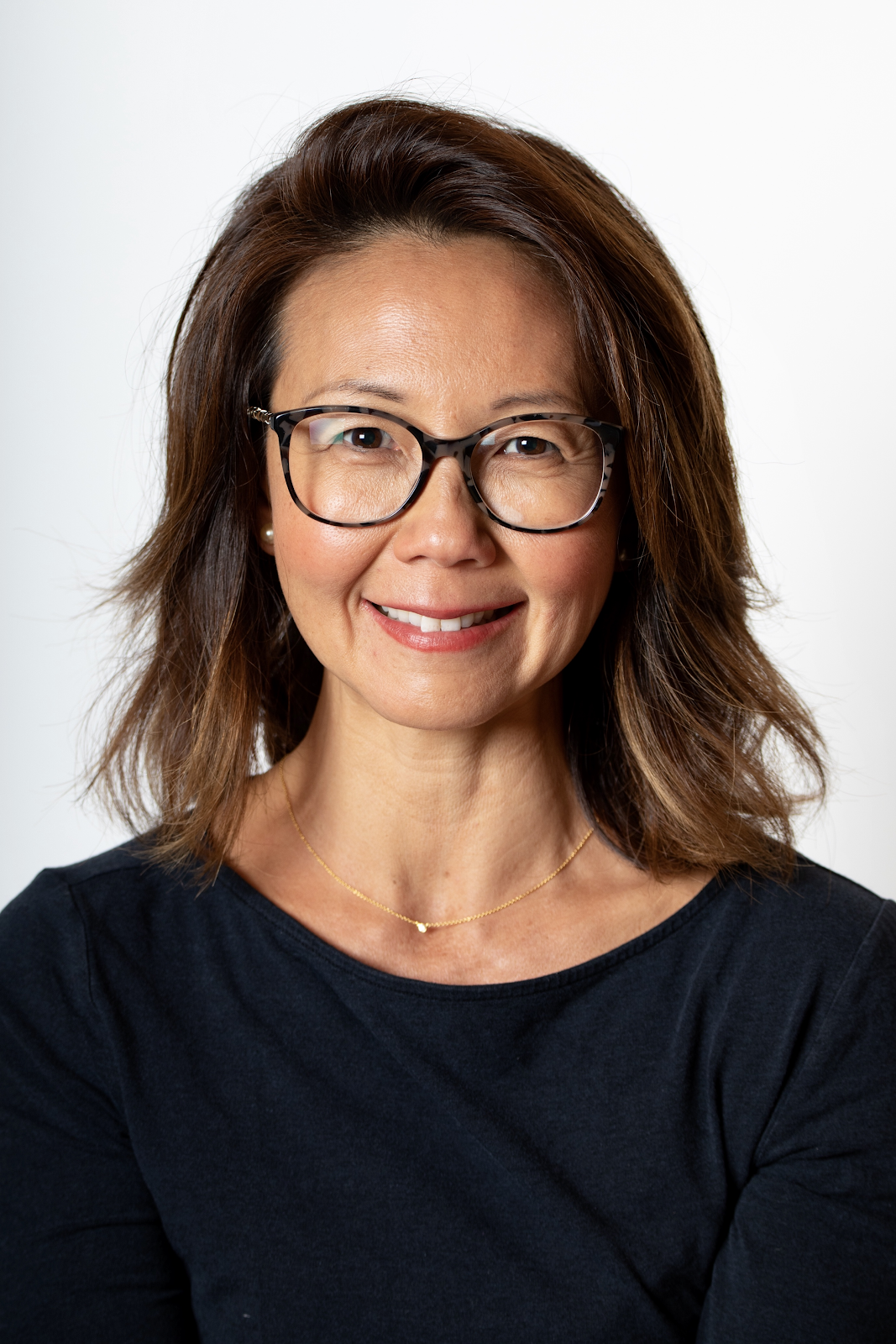
Christine Ahn

is the Executive Director of Women Cross DMZ, a global movement of women mobilizing to end the Korean War, reunite families, and ensure women’s leadership in peace building. She is also the international coordinator of the transnational feminist campaign, Korea Peace Now! Women Mobilizing to End the War. Christine has organized peace and humanitarian aid delegations to North and South Korea, and has addressed the U.S. Congress, United Nations, Canadian Parliament, and the Republic of Korea National Commission on Human Rights. Her writings have appeared in major publications, such as The New York Times, The Washington Post, and TIME Magazine, and she has appeared on BBC, CNN, Democracy Now!, MSNBC, and the Samantha Bee Show. Christine has worked with prominent women’s organizations, including the Global Fund for Women and the Women of Color Resource Center. Ms. Ahn is the recipient of the 2020 US Peace Prize “for bold activism to end the Korean War, heal its wounds, and promote women’s roles in building peace.”

1 Comment
BBW Nanaimo link
5/21/2024 11:15:56 pm

Great poost thanks

Reply


Leave a Reply.

    Author

    Write something about yourself. No need to be fancy, just an overview.

    Archives

    October 2020
    September 2020

    Categories

    All

    RSS Feed

Home  |  About  |  Blog  |  Iconocast  |  Library  |  Gatherings  |  Donate  |  Contact  |  Comrades