WWW.JESUSRADICALS.COM
  • About
  • Rock! Paper! Scissors!
    • What's in a Name?
    • Submission Guidelines
    • Call for Content
    • Past Issues >
      • Blog Archives (2005 - 2017)
      • Liberation for Every Body
      • The Movement Makes Us Human
      • Truth, Trust, and Power
      • Art Against Empire
      • Earth, Ecology, and the End of the Age
      • Decolonization, Incarnation, and Liberation
  • Library
    • Add an entry
    • Letter A >
      • Abelism
      • Accountability
      • Ally
      • Anarchism
      • Animal Liberation
      • Anthropocentrism
      • Assimilation
    • Letter B >
      • Base Communities
      • Biblical Exegisis
    • Letter C >
      • Capitalism
      • Catholic Worker
      • Civilization
    • Letter D >
      • Decolonization
      • Direct Action
    • Letter F >
      • Factory Farming
      • Feminism
      • Foraging
    • Letter G >
      • Genocide
      • Globalization
    • Letter H >
      • Heteropatriarchy
      • Humane Killing
    • Letter I >
      • Internalized Oppression
      • Intersectionality
    • Letter L >
      • Liberation Theology
    • Letter M >
      • Marginal Voices
      • Mass Media
    • Letter N >
      • Nonviolence
    • Letter O >
      • Othering
    • Letter P >
      • Pedagogies of Liberation
      • Police
      • Privilege
    • Letter Q >
      • Queer
    • Letter R >
      • Racism
      • Resurrection
    • Letter S >
      • Speceisism
      • Spiritual/Cultural Appropriation
      • State
    • Letter T >
      • Technology
      • Theopolitics
    • Letter V >
      • Voting
    • Letter W >
      • War
      • White Supremacy
  • Iconocast
    • Collective
    • Canvas
  • Donate
  • Contact
  • Join Us
  • About
  • Rock! Paper! Scissors!
    • What's in a Name?
    • Submission Guidelines
    • Call for Content
    • Past Issues >
      • Blog Archives (2005 - 2017)
      • Liberation for Every Body
      • The Movement Makes Us Human
      • Truth, Trust, and Power
      • Art Against Empire
      • Earth, Ecology, and the End of the Age
      • Decolonization, Incarnation, and Liberation
  • Library
    • Add an entry
    • Letter A >
      • Abelism
      • Accountability
      • Ally
      • Anarchism
      • Animal Liberation
      • Anthropocentrism
      • Assimilation
    • Letter B >
      • Base Communities
      • Biblical Exegisis
    • Letter C >
      • Capitalism
      • Catholic Worker
      • Civilization
    • Letter D >
      • Decolonization
      • Direct Action
    • Letter F >
      • Factory Farming
      • Feminism
      • Foraging
    • Letter G >
      • Genocide
      • Globalization
    • Letter H >
      • Heteropatriarchy
      • Humane Killing
    • Letter I >
      • Internalized Oppression
      • Intersectionality
    • Letter L >
      • Liberation Theology
    • Letter M >
      • Marginal Voices
      • Mass Media
    • Letter N >
      • Nonviolence
    • Letter O >
      • Othering
    • Letter P >
      • Pedagogies of Liberation
      • Police
      • Privilege
    • Letter Q >
      • Queer
    • Letter R >
      • Racism
      • Resurrection
    • Letter S >
      • Speceisism
      • Spiritual/Cultural Appropriation
      • State
    • Letter T >
      • Technology
      • Theopolitics
    • Letter V >
      • Voting
    • Letter W >
      • War
      • White Supremacy
  • Iconocast
    • Collective
    • Canvas
  • Donate
  • Contact
  • Join Us
Search by typing & pressing enter

YOUR CART

Rock! Paper! Scissors!
 Tools for anarchist + Christian thought and action

Vol 1. No. 2 ​
Liberation for Every Body: 
Toward New Futures with Other Animals

Guest editor: Nekeisha Alayna Alexis
Photo courtesy Jo-Anne McArthur / We Animals.
10/4/2018 Comments

Introduction

By: Nekeisha Alayna Alexis
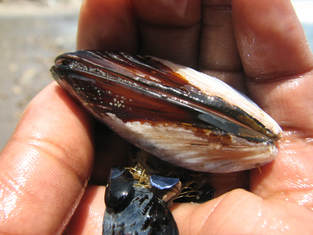
PictureGently holding live mussels before returning them to the ocean at Paradise Cove in Malibu, California. Credit: Nekeisha Alayna Alexis
A goat called Fred.
A hurricane named Florence.
A song by Lupe Fiasco.
​
At a glance the three topics don’t seem like they belong in the same introduction much less the same paragraph. Yet, when examined individually and together, the goat, the storm and the emcee have more in common than their coincidental use of an “f” word. They make visible in a profound way the almost dizzying entanglements that the second issue of Rock! Paper! Scissors! Tools for anarchist + Christian thought and action seeks to examine: that of the brutality we inflict upon other animals and its colliding, ensnaring relationship to the oppression that takes place among homo sapiens(1) this side of the Enlightenment.

Fred came to me first via a headline in my Facebook feed. The New York Post article about the “rogue goat,” as the authors dubbed him, showed up well after I decided upon the theme, “Liberation for Every Body: Toward New Futures with Other Animals.” Fred had escaped from the Hackettstown Livestock Auction House in New Jersey during the summer of 2017 and remained a fixture in the neighborhood. Not content to rest in his own freedom, he broke out approximately 80 goats and sheep from the same site a year later.

Although no one saw Fred orchestrate the release of his fellow creatures — 10 to 20 of whom remained loose and 60 others who returned to captivity through the trickery of police officers — a couple of signs point to his likely involvement. First, residents had spotted him in the area hours before the direct action. Second, auction house manager Bouwe Postma saw the goat the next day headbutting the fence surrounding the group of animals “in an apparent effort to let them back out.”

Postma concluded that, “He must have banged that fence and let [them] out last night. I’m almost positive. He must have put a lot of force into that.” But this was no idle show of strength. To have pulled off this raid, Fred must have remembered what he experienced at the auction. He had to know who is enemies were and understand that they were also the enemies of any other animal locked up behind the gates. He must have had empathy for the other animals that ended up there, even across species. Despite the news story’s flippant tone, Fred’s rescue operation was no joke: it was a rebellious undertaking that was executed by a stealthy, self-aware, freedom-minded, nonhuman person. It was a courageous, compassionate move that many homo sapiens do not dare for one another, much less for other animals.

That we do not see or hear more stories about such acts of selfless, creative resistance is neither a reflection on the intelligence of incarcerated and abused other animals nor some testament to their “willingness” to be sacrificed for us. Instead, our lack of attention to these narratives highlights the ways we fail to see them as actors in their own struggles for self- and communal determination, and the ways we write off their disobedience as mere coincidences. It is also a sign of the near total, crushing power we have attained over other animals and the efficacy with which we carry out this domination, hidden away as the machine often is from the vast majority of our hearts, minds and visions.

Florence, which landed in North Carolina about a month after Fred’s sabotage, is a fitting example of this callous violence. As the hurricane neared the mainland, there was anxiety about the impact it would have on the massive shit lagoons generated by the millions of pigs raised for slaughter on the industrial farms in the area. However, as Alexandra Isfahani-Hammond notes, the 9.7 million pigs as well as their fellow chickens and turkeys were absent from news reports on this potential problem. She writes, “The more we see of them, the less we see them. Their suffering is defiantly ignored in stories which, bizarrely, use their images but focus solely on their manure.”

Even as my fellow race and animals scholars(2) grieved that living, thinking, feeling orphans, babies, mothers and children were being left to drown without so much as the chance to save themselves, we were not surprised. As property and soon-to-be commodities, as creatures designated for death, the 5,500 pigs and 3.4 million chickens were never really alive if by “aliveness” we mean more than existing and tortured. To the minds of those who “owned” them, each animal was already expired — walking dead — and the transition from perception to reality by the filling of lungs with putrid water was just a novel form of dispatch compared to the everyday practice of bolt guns, slit throats and mutilation.

As Florence loomed, I came across another story I had not heard before: that of the plight of the inmates at Orleans Parish Prison during Hurricane Katrina. Despite the mayor of New Orleans and governor of Louisiana calling for a mandatory evacuation, the city’s sheriff declared, "The prisoners will stay where they belong." What transpired in the days after was chaos as the facility’s generators and lights failed, the already stuffy air became stifling and flood waters mixed with waste began to rise around those trapped in their cells and in a locked gym. Over the course of the unprecedented storm: “…terrified prisoners began to riot in the sewage-tainted floodwaters” and “Downstairs, water rose from the prisoners’ ankles, to knees, to waists.” Eventually, personnel fled and basic services like food distribution stopped. In an anonymous interview, a guard later reflected that, “The prisoners thought we were all planning to leave them to die locked in there’…’and I can’t say I blamed them for thinking that.’” Instead of waiting to die or be saved, they freed themselves by breaking through the cinderblock walls only to discover armed deputies waiting in boats ready to both rescue and recapture them.

To be clear, the argument I am not making in recounting the tale of another hurricane is that the suffering of the prisoners in Orleans Parish was “the same” as that of the pig, chicken and turkey captives in North Carolina. Although we are indeed all biological animals, each group and each individual within the group has important similarities and differences in the way they experience trauma. There is also the subtle but important distinction that the exploitation of other animals denies their ability to fully and freely exist in their own species worlds, while the exploitation of Black and other non-White people, the economic underclass and other excluded and vulnerable homos sapiens results from a denial of full access to a body within which we already technically belong.

Even so, a profound, gut-level truth is revealed when an anonymous statement launching this year’s nationwide prison strike reads, “Prisoners understand they are being treated as animals. Prisons in America are a warzone. Every day prisoners are harmed due to conditions of confinement. For some of us it’s as if we are already dead, so what do we have to lose?” That is, the truth that the term “animal” is not merely a biological category identifying those who are not members of the species homo sapien. Instead, “animal” is a container that justifies a social location of vulnerability and worthlessness. It is, as Maneesha Deckha describes it, “a violence-producing category,” and it is a violence-producing category that applies not only to those we think of as actual animals, but also to those homo sapiens deemed not-quite-human-enough in the various hierarchies that now order our world from early race theorizing through colonization and its aftermath.
​

In her insightful work, Dangerous Crossings: Race, Species, and Nature in a Multicultural Age, Claire Jean Kim writes:

The conventional wisdom is that powerful groups have used animalization to 'dehumanize' less powerful groups, demoting them from category A (humans) into category B (animals) and this stripping them of the entitlements, rights and protections distinctively owed to humans... I argue... That racialized groups were never fully seen as human to begin with, so they did not have this status to lose.
As Aph Ko and Syl Ko outline in Aphro-ism: Essays on Pop Culture, Feminism, and Black Veganism by Two Sisters, the category “human” does not merely describe homo sapiens. Instead, on this side of the Enlightenment, the human is reserved for White (able-bodied propertied heterosexual Christian) males while “’the animal’ is supposed to express a deviation  from that way of being” (25). The ultimate contest and the extreme ends of the hierarchy, then, are not between Whiteness and Blackness, but between Whiteness and the animal. It also means that Blackness, imagined as we are as the most like animals if not actual animals, is the mark of the most abject of homo sapiens: that our rank in the hierarchy is close enough for us to face the same brutality. As the Ko sisters explain, “what condemns us to our inferior status, even before we can speak or act is not merely our racial category but that our racial category is marked the most by animality” (67). This means that, “The racial hierarchy tracks not just a color descent but also a species descent. . . .The closer your category is to the shady, vague animal, the less you ‘matter’” (66).

Which brings me to the third F, that of Lupe Fiasco, and the arrival of his album, Drogas Wave. The overarching narrative of the 24-track project is that of a group of slaves jumping from a ship on the Middle Passage into the ocean and, instead of drowning, living under the waters and sinking other slave ships as they pass. Although there are many incredible songs, the one that immediately brought this journal issue to mind is “Down.” An entire essay could be written unpacking each line and verse, but a deep look at the chorus which opens the song will suffice. Together, Lupe and collaborator Nikki Jean sing:
Fish is my friends and the whales is my homies
Octopuses my people, the shrimp, they all know me
The sharks is my niggas, the dolphins is with us
The crabs is my comrades, the seahorse be holdin' us down
Jellyfish, they just be rollin’ around
Lobsters is cool, they are not food
They're part of the crew
And that mean they down (and that mean they down)
In this imaginative myth, oft forgotten, underrated and routinely slaughtered-by-the-billions sea creatures join with submerged former slaves who were themselves, in the colonizers minds, non-humans. Together they destroy vessels of pain, sickness and trauma before the boats reach the land, the plantation and all the violence of that socioeconomic arrangement. The words of the song communicate a shared reality and kindred existence in which the now ocean-dwelling African-descended ones who live “at the bottom” are embraced by the ones who are already “at the bottom.” The single word, “down,” here is thick with meaning. It signifies that this cast of beings are on the last rung of a hierarchy that upholds White masters and slaveholders, and as such are unseen, unheard, unvalued. But “down” also means that they are in the business of sabotage together: they understand one another’s plight and form their own crew in opposition to the crews aboard the ships. This shared existence of being “down” ultimately transforms the standard set of homo sapien and sea creature relations. Among the not-quite-dead, not quite-human slaves, the lobsters are “cool” instead of "its" to be captured, boiled alive and eaten. Instead of captive and catcher, consumer and consumed, the joint situation “at the bottom” makes them friends, niggas, comrades and co-conspirators. Solidarity rather than antagonism or disregard characterizes their connection as they struggle against death-dealing, dominating powers together.
​

I don’t know if Lupe allows this image of interspecies rebellion to affect his personal choices or if the animals serve only as a clever metaphor for Black experience. But “Down” remains a striking track within the context of the project and nevertheless communicates a message of intersecting liberation between other animals and the least of the least among homo sapiens. As the Ko sisters insist, “If we reclaim ‘the animal’ in the same way that we’ve reclaimed blackness, we acknowledge that nonhuman animals, too, are among the many beings who are condemned in the current system” (69). This understanding can move us to act for other animals “from within an antiracist commitment” (69) and, I would add, from a commitment to life abundantly for every body more broadly.

If hatred of Blackness especially, and of other groups who are denied full human status — women (“bitches”), Muslims (“terrorists”), LGBTQ persons (“deviants”), the poor (“trash”) and disabled people (“retards”) for example — is anchored by the destructive ways we conceive of other animals, then the work of liberation must involve reevaluating our thinking about and changing our behavior toward nonhuman beings from objectification, dismissal, subjugation, and violation to recognition, release, compassion and peaceableness. We cannot have functional antipathy toward other animals and expect to get closer to new life for all who are animalized. Animal advocacy interhooks and overlaps with other forms of resistance, and I am grateful to the poets, witnesses, organizers, writers, carnival-makers, mothers and care-givers in this issue for helping to make this perspective clearer.

(1) Giving credit to Aph and Syl Ko whose exceptional book,
Aphro-ism: Essays on Pop Culture, Feminism, and Black Veganism by Two Sisters, has inspired my use of the term homo sapiens and has sharpened a great deal of my thinking  on race, animals and oppression.
(2) Gratitude to CalvinJohn Smiley for raising my awareness to the situation in North Carolina and to he and Alexandra Isfahani-Hammond for all our sharing over the course of the storm.

Picture
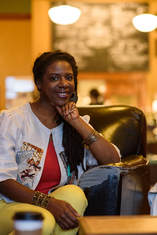
Nekeisha Alayna Alexis is an independent scholar with wide-ranging interests in race, human and animal oppression, intersectionality and co-liberation with other animals; Christian ethics and theology concerning other animals; and connections between anarchist politics and liberative Christian faith and practice. She is the co-founder and a co-organizer of Jesus Radicals.

Comments
comments powered by Disqus

    About the journal

    Rock! Paper! Scissors! is a topic-focused, web-publication exploring issues from anarchist, radical Christian and other anti-oppression perspectives. To find out more, read the introductory piece, "What's in a name?"

    Current issue

    :Vol. 1 No. 2: Liberation for Every Body: Toward New Futures with Other Animals

    Past issues

    Vol. 1. No. 1: The Movement Makes Us Human

    Categories

    All

    RSS Feed

Home  |  About  |  Blog  |  Iconocast  |  Library  |  Gatherings  |  Donate  |  Contact  |  Comrades